How I built
Ice Runner.
I started Ice Runner to see how far I could take AI coding agents on a real game—not just a prototype.
Since late July, I’ve rebuilt major parts four or five times, broken plenty of things, and changed direction after playing what I’d built.
Watch the first prototype.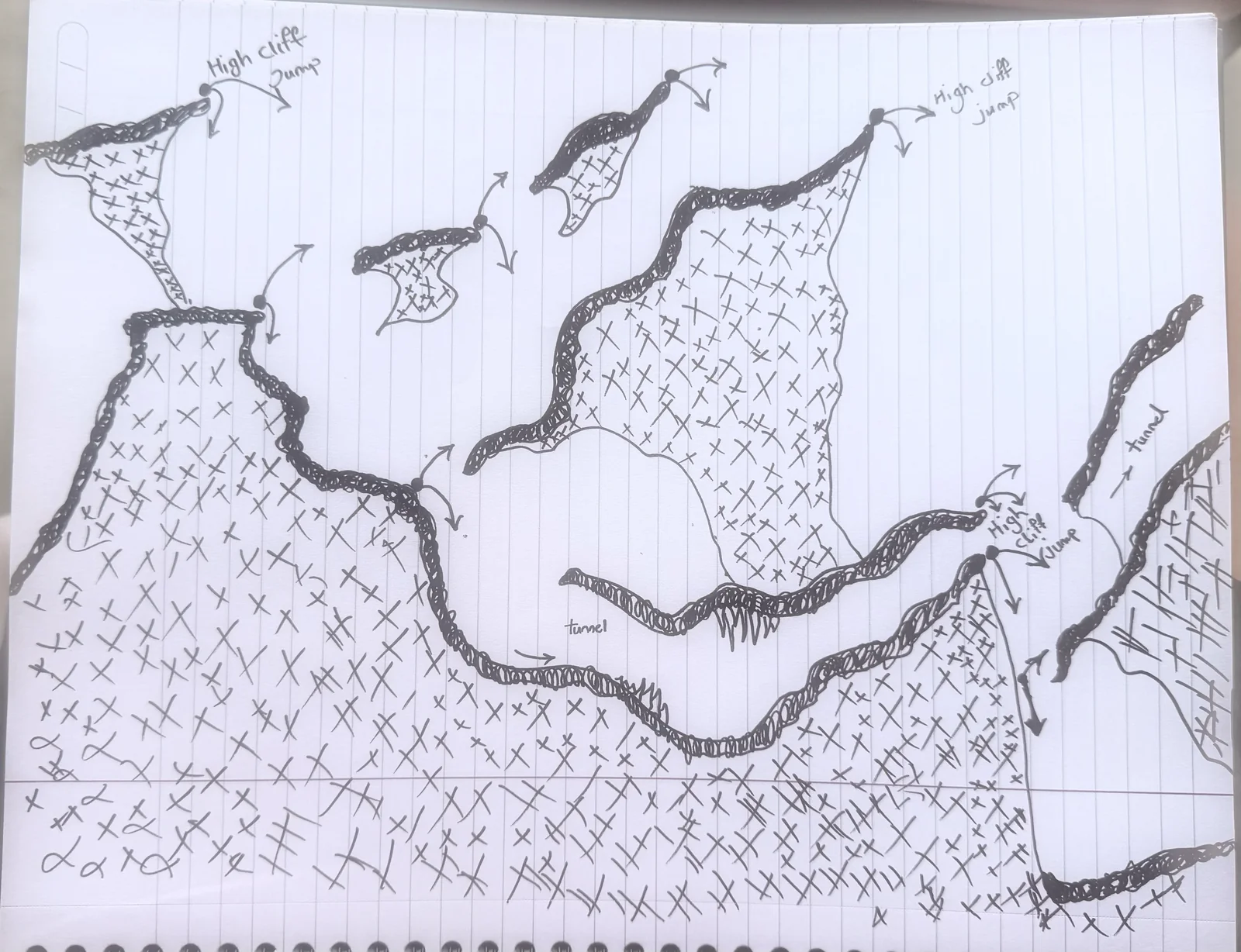
I started with paper sketches.
Describing a level in a prompt didn’t always work. Drawing the mountains, tunnels, drops, and routes often made it easier to show the agents what I wanted.
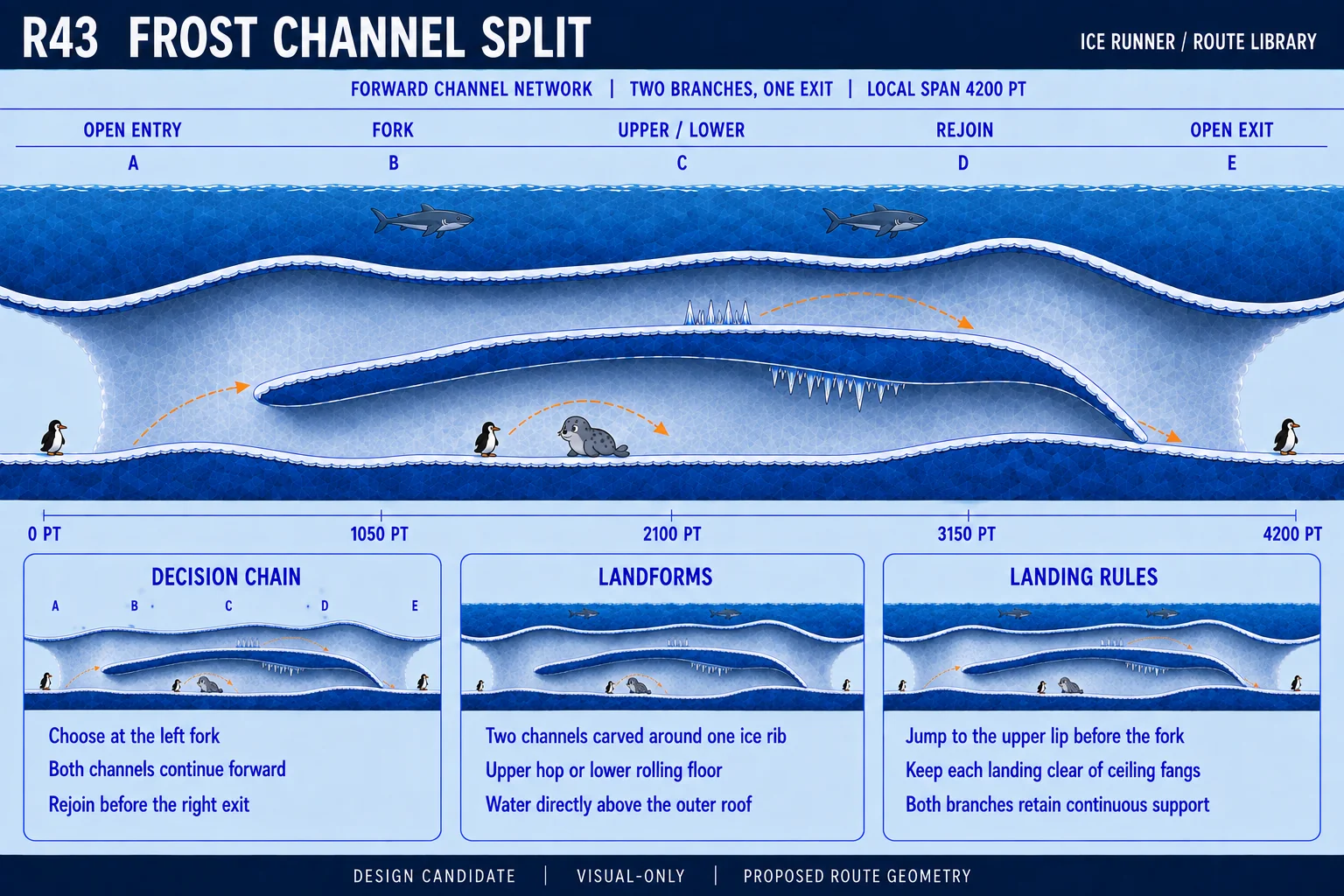
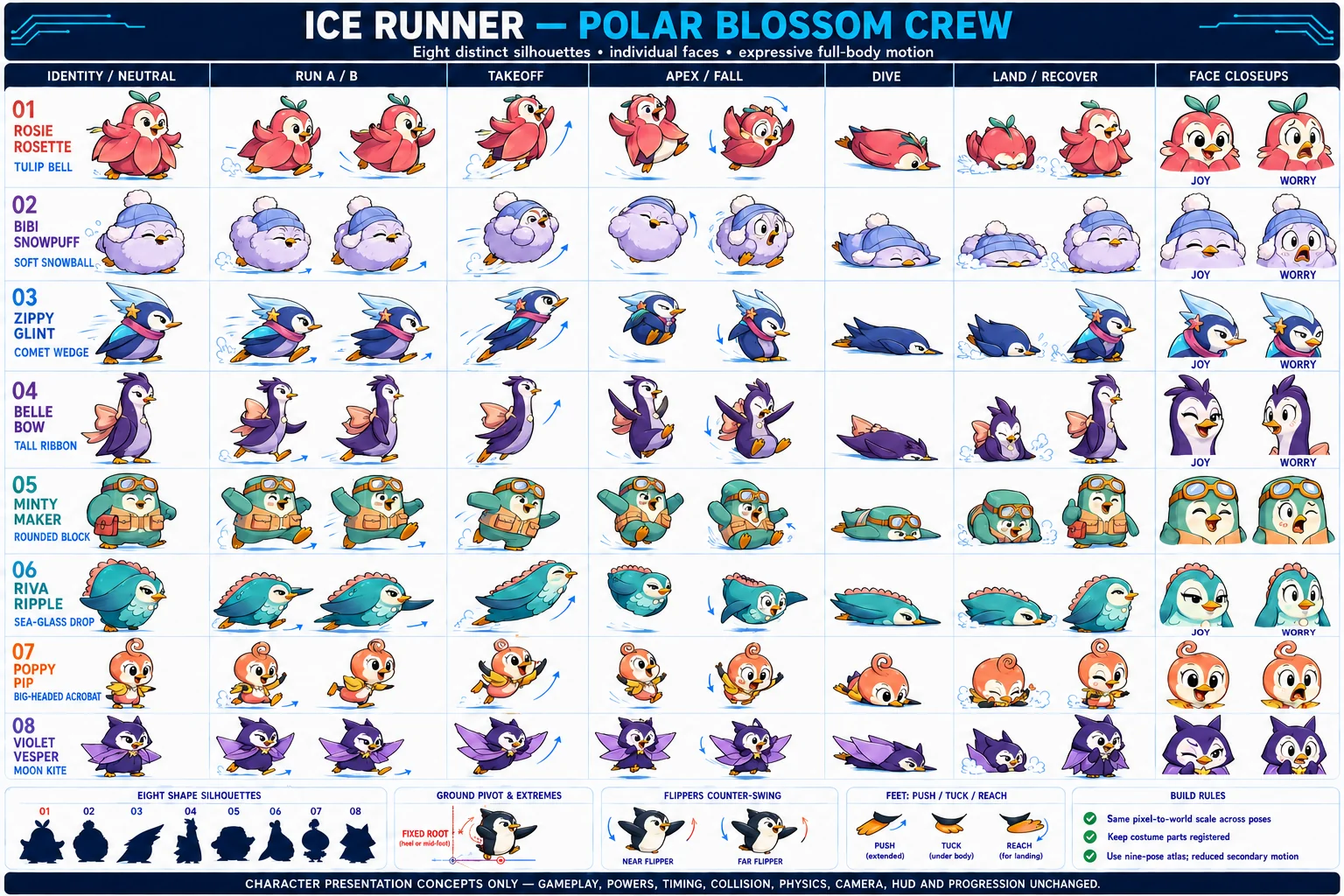
Those sketches became design sheets.
I created visual references for the penguins, terrain, and environments to keep them consistent across levels.

Once I was happy with the drawings, I turned the process into a reusable skill. That meant less explaining from scratch and more building on what worked.
What I learned.
Giving agents separate jobs helped prevent duplicate work. But assigning tasks wasn’t enough—the game improved when I stayed involved, played each version, and gave specific feedback.
Agents can get stuck on the wrong things.
Sometimes they spent too long fixing tests or polishing small details while gameplay remained unfinished. I had to bring them back to what mattered to the player.
Simpler code shouldn’t mean a simpler game.
Some attempts to simplify the code removed what made a level interesting. I learned to protect the gameplay idea, then improve the implementation.
Popular skills aren’t always useful.
Some added unnecessary steps or made the results worse. I kept the ones that helped and dropped the rest.
Specific tasks worked better than bigger prompts.
When “make this level better” wasn’t working, I broke it down: fix the terrain, adjust the camera, improve the animation. Tackling each problem separately helped me get closer to what I wanted.

I’m Shahryar.
I work in AI, and Ice Runner is my personal project. Outside work, I enjoy chess, cooking, and seeing what else I can build.